


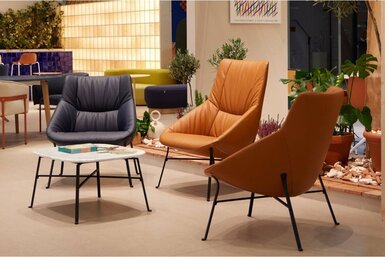
Colors have a strong influence on human emotions, mood, and behavior. Some are stimulating and encouraging, while others have the ability to soothe. How do you choose the right ones? In a work environment, it is crucial to select colors that support concentration and productivity.
Colors for Employee Satisfaction
Colors have a strong influence on human emotions, mood, and behavior. Some are stimulating and encouraging, while others have the ability to soothe. How do you choose the right colors? In a work environment, it is crucial to select those that support concentration and productivity.
Here are some of the most suitable colors for office use:
- Blu — symbolizes tranquility and peace. It supports concentration and productivity and can help reduce stress and anxiety. Blue is suitable for areas where tasks requiring focus and concentration are performed—such as computer work, writing, or reading.
- Gree — , as the color of nature, supports creativity and imagination; it can also help improve mood and productivity. It is recommended in industries where a creative approach is required, such as design, marketing, or product development.
- Whit — is the color of purity and freshness; it can reduce stress and anxiety. Similar to blue, white is an ideal ally for tasks requiring focus and concentration.
You can use these colors in several shades (but avoid overly vivid, neon shades as well as dark navy). It is advisable to combine them—for example, using white and green as base colors for office walls. And what about other colors? Yellow, orange, and red are energizing and promote activity. On the other hand, they can be intrusive and distracting during work that requires focus. Therefore, they are less recommended for the office environment. Completely unsuitable colors are purple and black. In an office, they appear gloomy or even depressing, and employees might feel fatigued or demotivated.
Lighting That Supports Concentration
Lighting is just as important as color when creating a pleasant and stimulating work environment. Natural daylight is the best and healthiest for humans. If you have enough of it in the office, it is an ideal situation. Don't forget to consider suitable window shading during sunny days. Whether the space is sunny or, conversely, rather dark, it is always necessary to ensure suitable artificial lighting. This should simulate daylight as closely as possible. Choose artificial light that is sufficiently bright and evenly distributed throughout the room to allow for comfortable work.
The most suitable types of artificial lighting in administrative spaces include:
- LED lightin — is energy-efficient and has a long lifespan. This type of lighting is also very flexible and can be used to create various lighting effects.
- Halogen lightin — is bright and provides good illumination, but it is more energy-intensive than LED lighting.
- Fluorescent lightin — is energy-efficient but can be slightly harsh. Additionally, it is less flexible compared to LED lighting.
Here are a few more tips for choosing the ideal lighting:
- If the office is large, use several smaller light fixtures instead of one large fixture. This will help distribute light evenly throughout the space.
- In a small office, use one large light fixture. This will create a sense of open space.
- If the office is primarily for computer work, use a light fixture specifically designed for computer tasks. It is easy on the eyes and does not distract during work.